
DIRECTOR OF YOUTH PROTECTION (DYP)

To make a report, call 1-800-361-8665 (for children in the Laurentians), or visit www.quebec.ca for contact information for DYP in other regions. 

If you need help regarding personal or family problems, call 811.

The specific mission of the Director of Youth Protection (DYP) is to protect children living in the Laurentian region. It promotes this exceptional law empowering partners and the community to ensure the safety and development of children. The DYP also ensures the rehabilitation and empowerment of young offenders in order to protect society.

It is parents who have the primary responsibility to ensure the safety and development of children. The exceptional nature of interventions by the Director of Youth Protection guides the actions of intervenors. The Director must therefore ensure rapid and effective intervention in the following situations :

  • abandonment
  • neglect
  • psychological mistreatment
  • sexual or physical abuse
  • serious behavioural problems

The Director can intervene within the updated terms of reference defined by:

SERVICES PROVIDED BY THE DYP :

OTHER SERVICES PROVIDED BY THE DYP:

Psychosocial follow-up under the Youth Protection Act (YPA)

Psychosocial follow-up under the Youth Protection Act (YPA) is provided when the safety or development of the child or teenager is endangered as defined by the YPA.  To receive this service, a report must be made to the Director of Youth Protection (DYP). The DYP will conduct an evaluation of the family situation and if it determines that the security or development of the child or teenager is endangered, the situation is referred to the specialized psychosocial service to provide intervention follow-up. 

The caseworker following up with the child or teenager and their family is responsible for ensuring the application of an agreement on voluntary measures or enforcement of court-ordered measures. This responsibility can lead to assistance, monitoring and control activities with the goal of ensuring the putting in place of the necessary measures to correct the situation of endangerment and to prevent its recurrence.

Rehabilitation service

Rehabilitation intervention is provided by a team of specialized educators. This is a specialized, time-limited, intensive service. It is a complement to the psychosocial intervention and is listed as a measure in the intervention plan. This type of intervention is to specifically address:  

  • Parenting skills (stimulation, supervision and educational methods).
  • The parent’s knowledge base and adjustment to their child’s development. 
  • Children’s and teenagers’ skills (communication, management of emotions, relationships, and resolution of problems and conflicts). 
  • The child’s or teenager’s wellbeing as well as the resumption or pursuit of their development. 
  • Reinforcement or development of parenting skills. 
  • Establishing, re-establishing or improving ties between the child and their parents.
  • Respect for socially acceptable standards and values by the child or teenager and their parents. 

The service has two components:

  • Rehabilitation without residential care is provided in the child’s home. 
  • Residential rehabilitation that takes place in a rehabilitation centre providing supervision and the sustained presence of an educational team to work with the young person. 

Residential care services

Residential care is an exceptional measure to support the intervention with the child and their family. It provides the child or adolescent with a substitute home. 

Recourse to residential care can occur when a young person’s behaviour exceeds certain bounds or when a parent is no longer able to manage the situation and finds themself powerless, or even overwhelmed by this behavior. In other situations, a young person can be so disturbed by their personal and/or family experience that they are no longer able to use appropriate measures to adapt and can place themselves at risk. 

Recourse to residential care always aims to return the child or teenager to their family home. 

Ouvre un lien interne dans la fenêtre couranteParents’ financial contribution to the placement of their child

Supervision of access rights

Supervision of access rights is used in exceptional circumstances. It is usually ordered by Court of Québec or by its Youth Division. It is only used in situations that require supervision and the accompaniment of parents or of children or teenagers to foster the relationship in a safe and secure environment, such as: 

  • When the exercise of access rights with a parent has been interrupted for a long period. 
  • When it is necessary to protect the child or adolescent from the behaviour and attitude of a parent. 
  • When meetings between the two parents are difficult or too fraught.
  • To allow a child or teenager who is removed from their family home to maintain a relationship with the other members of their family. 

Fondation du Centre jeunesse des Laurentides

 Fondation du Centre jeunesse des Laurentides

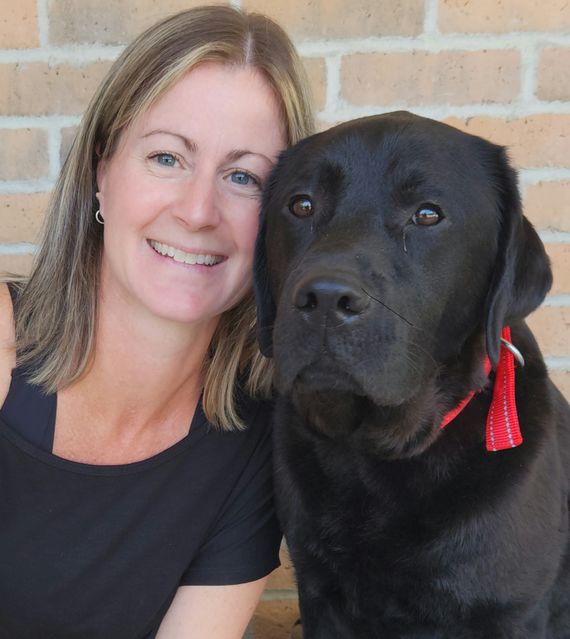
Stan, the emotional support service dog

Stan arrived at the CISSS des Laurentides in the summer of 2023 and was integrated into the Department of Youth Protection (DYP) teams thanks to a collaboration with the Mira Foundation for a period of five years. 

DYP employee Martine Lacelle soon took an interest in the project. In the Fall of 2022, she agreed to take charge of the dog, i.e.to welcome him into her home, to be with him at all times, both at home and at work, and to undergo nine days prior training with the Mira Foundation. It was there she first met Stan, a dog who is calm and, according to her, perfect for comforting children but also their parents and caseworkers, who are sometimes distressed by certain situations.

Specifically trained to accompany DYP caseworkers who work with children and adolescents, Stan comforts and calms them in difficult moments, like Court hearings, videoconferencing with police officers, visits to DYP offices or any other situation liable to cause anxiety or apprehension.

The agreement between the CISSS des Laurentides and the Mira Foundation is for five years, after which Stan will retire or may continue to work if he still able. One thing is certain: whichever the case may be, he will remain a member of Martine’s family. “My contract with Stan is for life.”


Quebec Sign Language (LSQ) videos

How to make a report to the DYP

What to remember when making a report