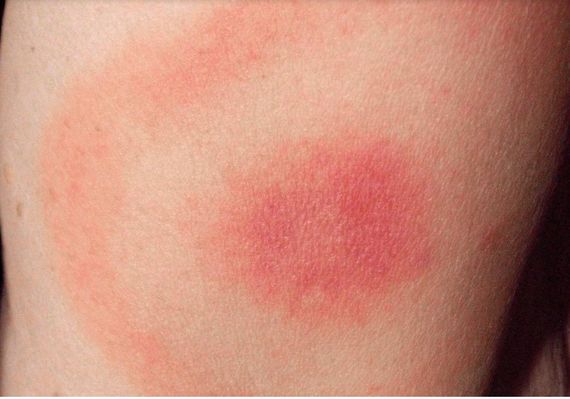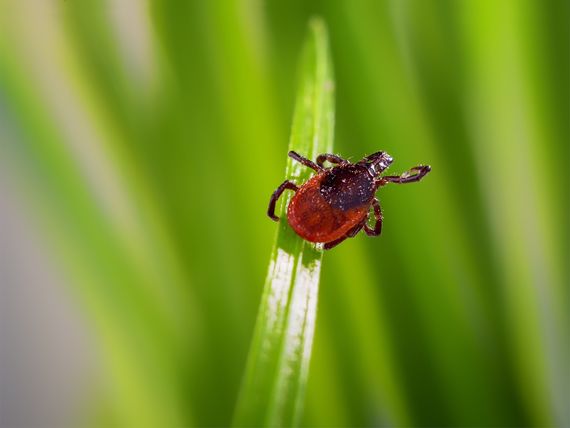
Lyme disease spreads through tick bites infected with a bacteria called Borrelia burgdorferi. In Québec, there are several species of ticks, but only one can transmit Lyme disease. It’s called Ixodes scapularis, also known as “black-legged tick” or “deer tick”. These ticks are mostly active as soon as temperatures reach 4°C in spring and into Fall until the first frost.
For the past fifteen years, there have been more and more cases of Lyme disease in Québec. In 2025, there were 1,015 cases in the entire province, most of them after becoming infected in the Eastern Townships, the Montérégie and the island of Montreal. But since 2022, the risk of infection has also been present in the Laurentians where 30 cases have been documented in 2025.
Currently, black-legged ticks that can transmit the disease are found in most municipalities in the Laurentians. It has to be said that as the climate warms ticks are continuing to spread north and east in the province. This means the risk exists in the entire region.
Lyme disease can only be transmitted through infected tick bites. If a tick remains on the skin less than 24 hours, the risk of getting sick is very low. However, the longer it remains on the skin, the more the risk increases. After a tick bite, a doctor or pharmacist can assess the situation. In certain cases, a person can be prescribed antibiotics (doxycycline) to prevent developing the disease.
Eligibility criteria for preventive treatmen::
- Having been bitten in an municipality where post-exposure prophylaxis is recommended;
- Having a tick attached to your skin for more than 24 hours;
- Having removed a tick within less than 72 hours;
- Having no contraindications for doxycycline.
 Carte de la zone d'endémicité de la maladie de Lyme au Québec et des secteurs visés par la prophylaxie postexposition, 2026
 one of the at-risk municipalities.